Read real Japanese
sooner than you think
This is the whole idea
Click any word below to look it up. Then tell Lingaku how well you know it and see how that changes your score at the top.
Find something you can actually read
Lingaku Explore collects Japanese articles, YouTube videos with subtitles, and web novels from Syosetu. They all get a level and difficulty score. What matters more is how much of this text you already know.
Two people can open the same article and see different percentages.
At 95%, you can probably just read it. At 60%, you might want to pick something easier, or read it anyway, with the dictionary one click away.
Filter by level, length, source or coverage. Sort by how many words you already know.
Read or watch it where it already lives
You don’t have to import anything. Install the browser extension and Japanese text on any website becomes clickable, with the same dictionary, highlighting, and tracking as on Lingaku.
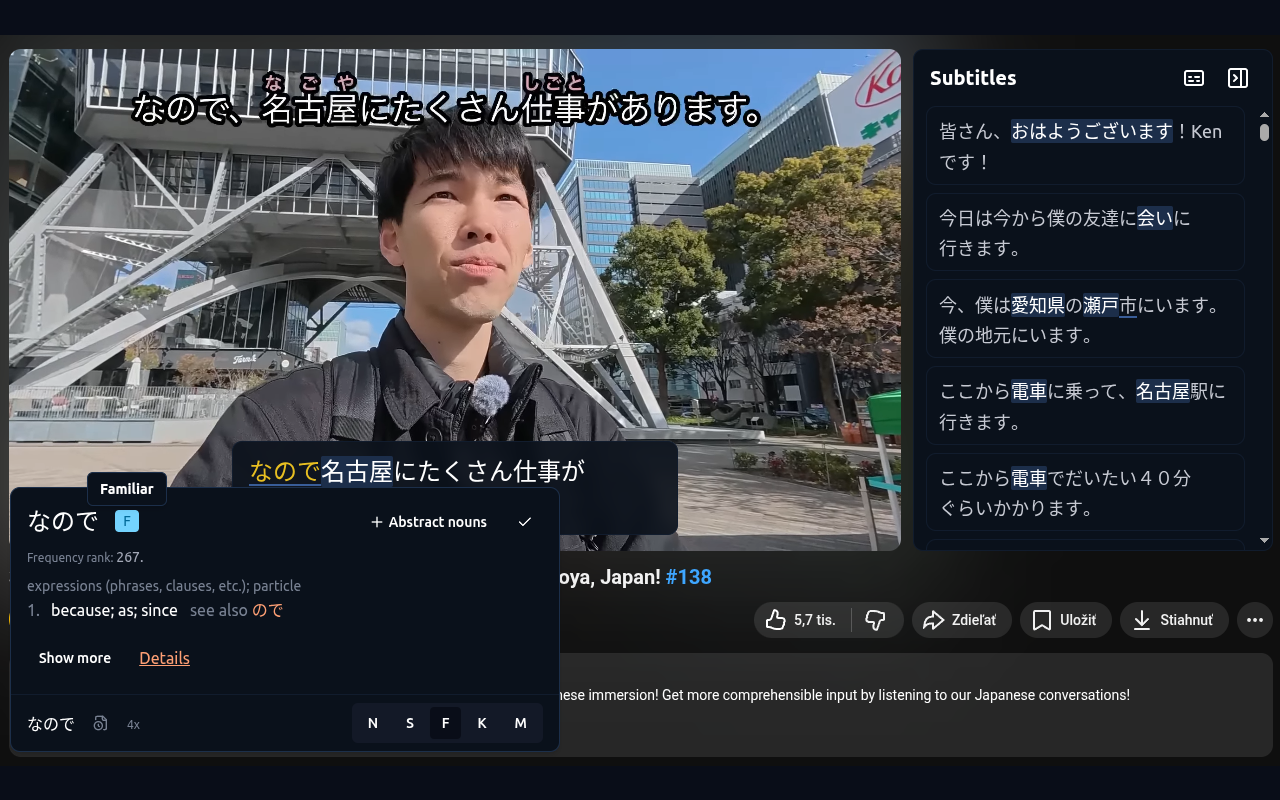
On YouTube, it goes further. Japanese subtitles get furigana and become clickable as the video plays. The video pauses while you check a definition, and a transcript sits beside the player so you can click any line to jump back to that moment.
The side panel shows the difficulty and your coverage for the page you’re on, along with every word you’ve looked up there.
Text in images and videos can be read too: manga pages, screenshots, photos and text burned into videos. Press Alt+Shift+O, then click an image, drag a frame over part of the page, or frame the text in a paused video. Lingaku lays the text it reads over the picture, and you click the words like on any other page. Vertical text works too.
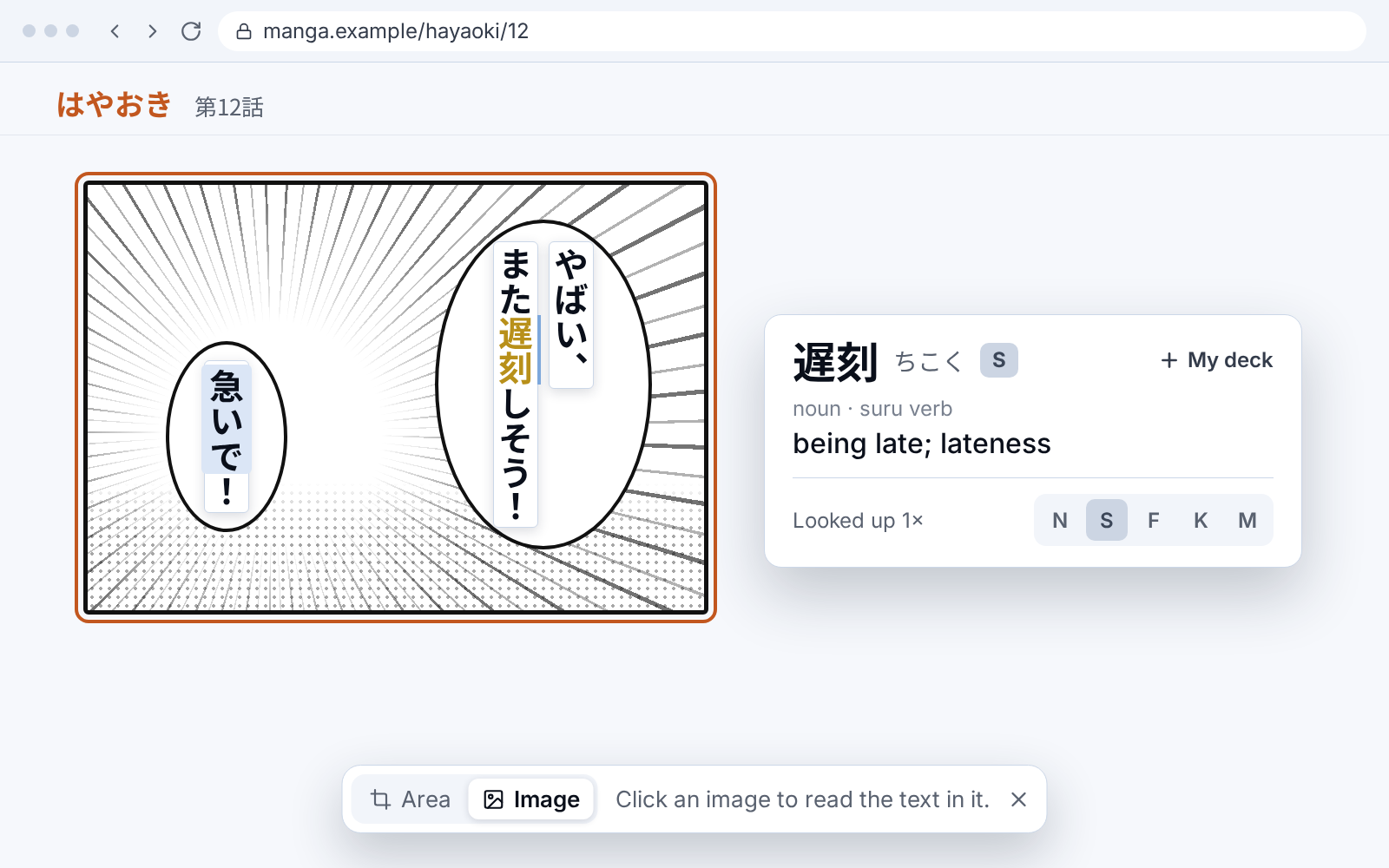
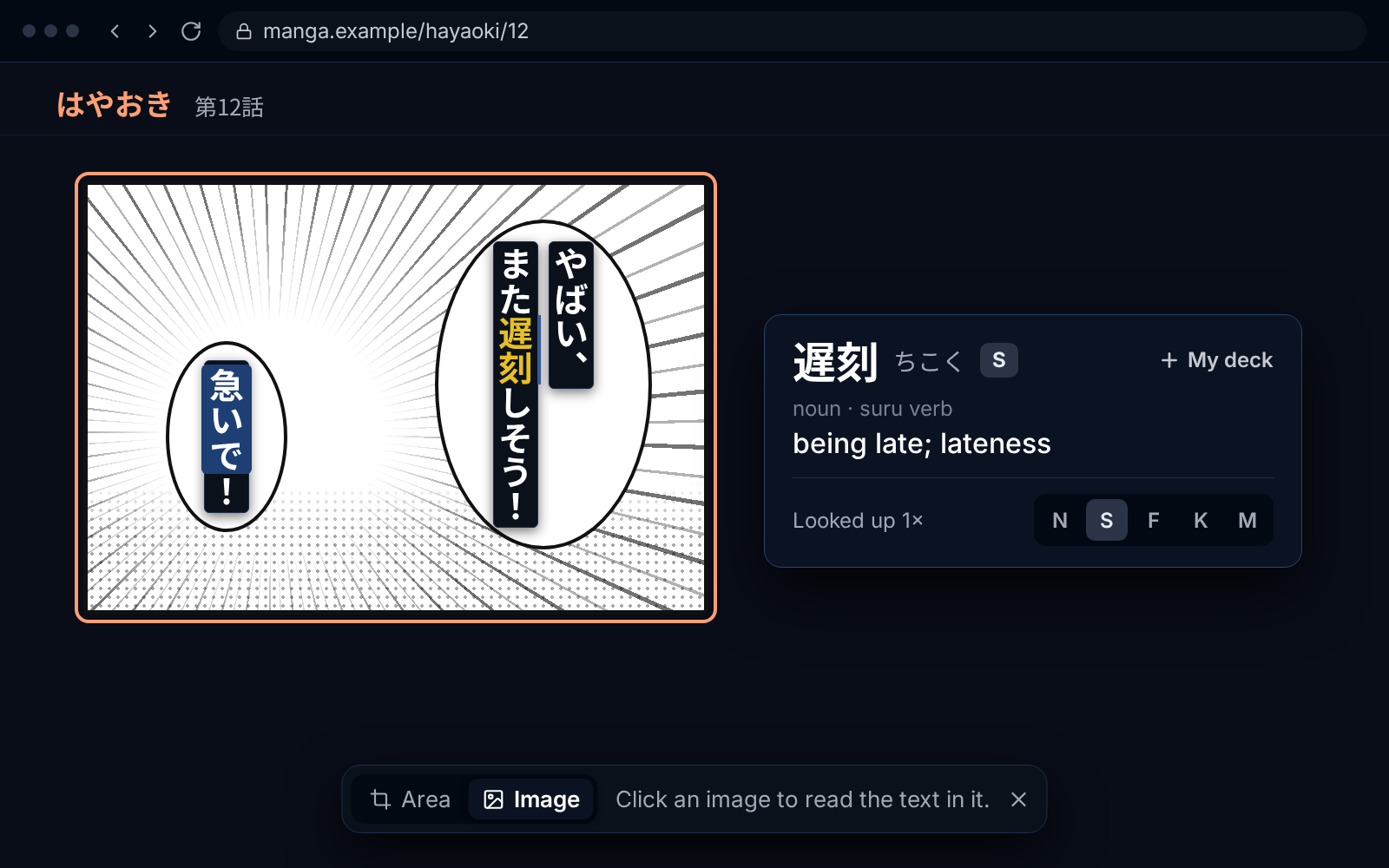
On lingaku.com, paste or drop an image into the search box and it is read the same way.
Lingaku ranks what to learn next
Every word is ranked by how common it is and how often you looked it up.
The ranking also counts how often a word came up in texts you marked as read. Words you marked Known go to the bottom. Kanji get a ranking of their own.
The top 20 words and 5 kanji form a batch called Currently learning. When one graduates, the next most relevant takes its place. New cards and reviews in a study session follow the same order.
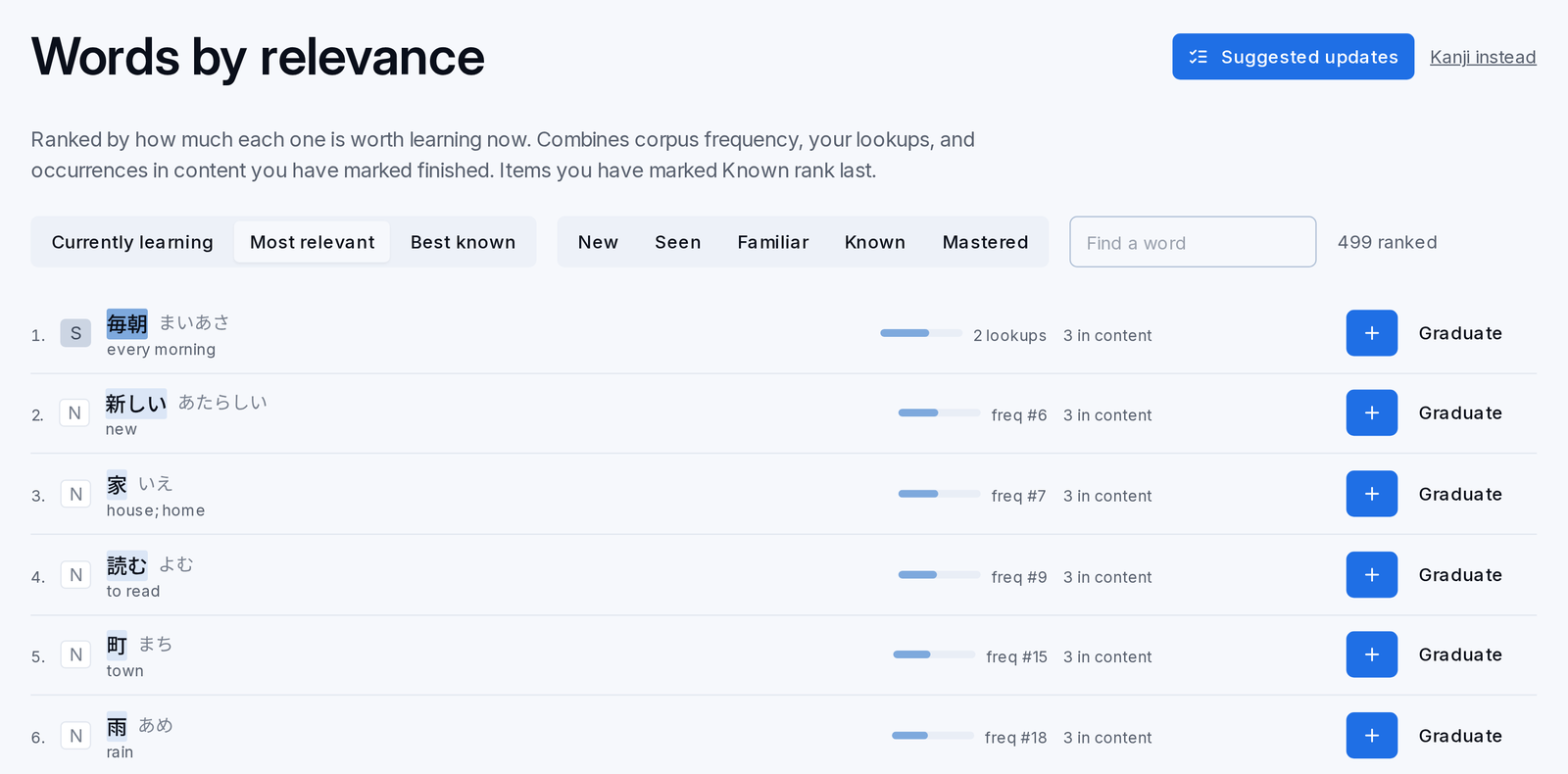
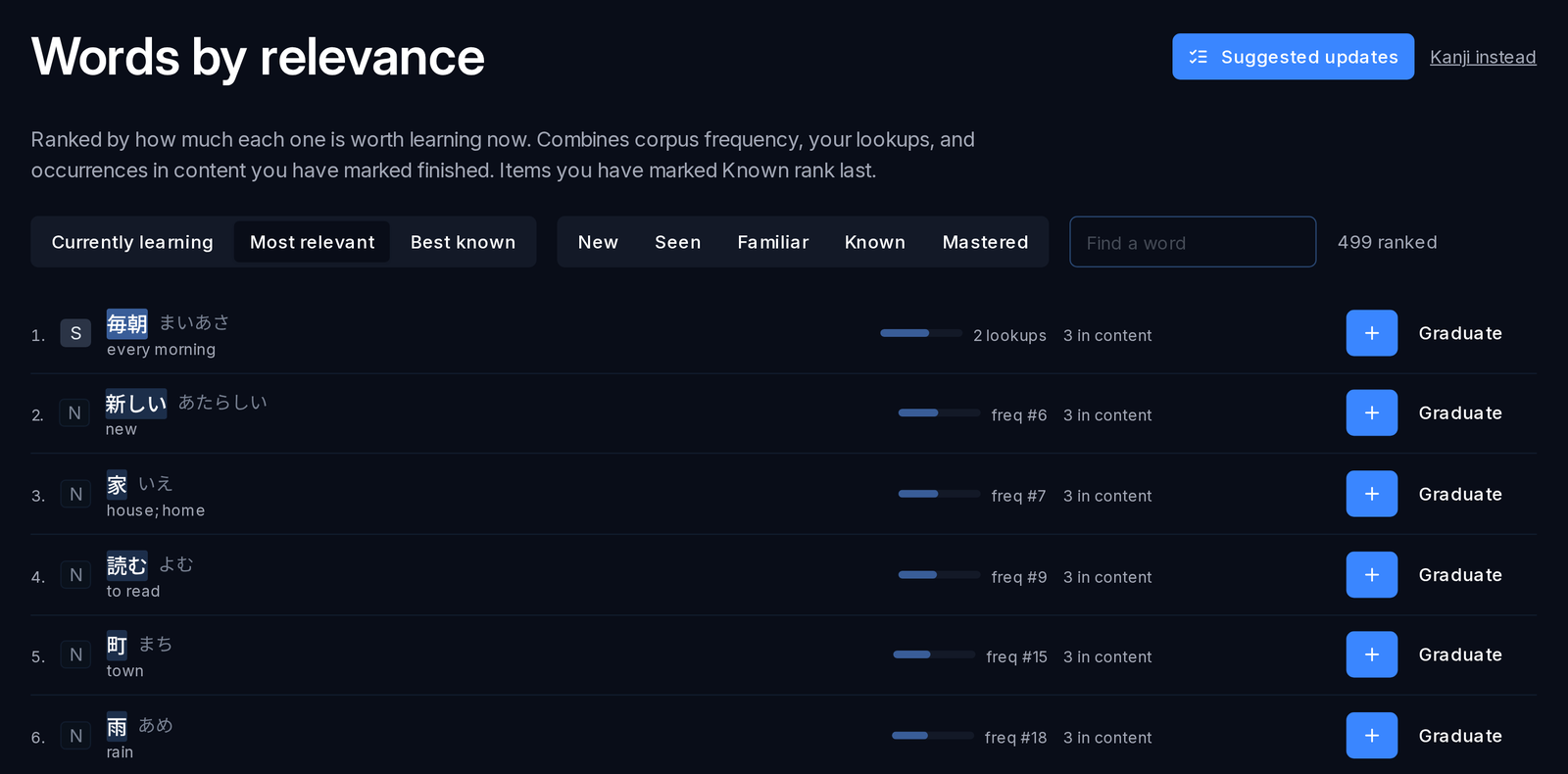
Words you read past without a lookup are suggested for a higher level. Nothing changes until you confirm it.
Every word you look up comes back
You only review words you actually came across, in the sentence where you found them.
Every lookup is saved with the page it came from, the surrounding sentence, and the timestamp for videos. So a word is never just an isolated entry on a list; you can always go back to where you saw it.
When you want to review, add those lookups to a deck, or study them directly without making one. The example sentence on the card is the one you actually read.
名古屋は有名なラーメンの街です。
Review scheduling is based on SM-2 and can be adjusted to fit how you study: session size, new-to-review ratio, card order, ease, and intervals. You can export to Anki, CSV, or JSON at any time.
See how much you’ve read
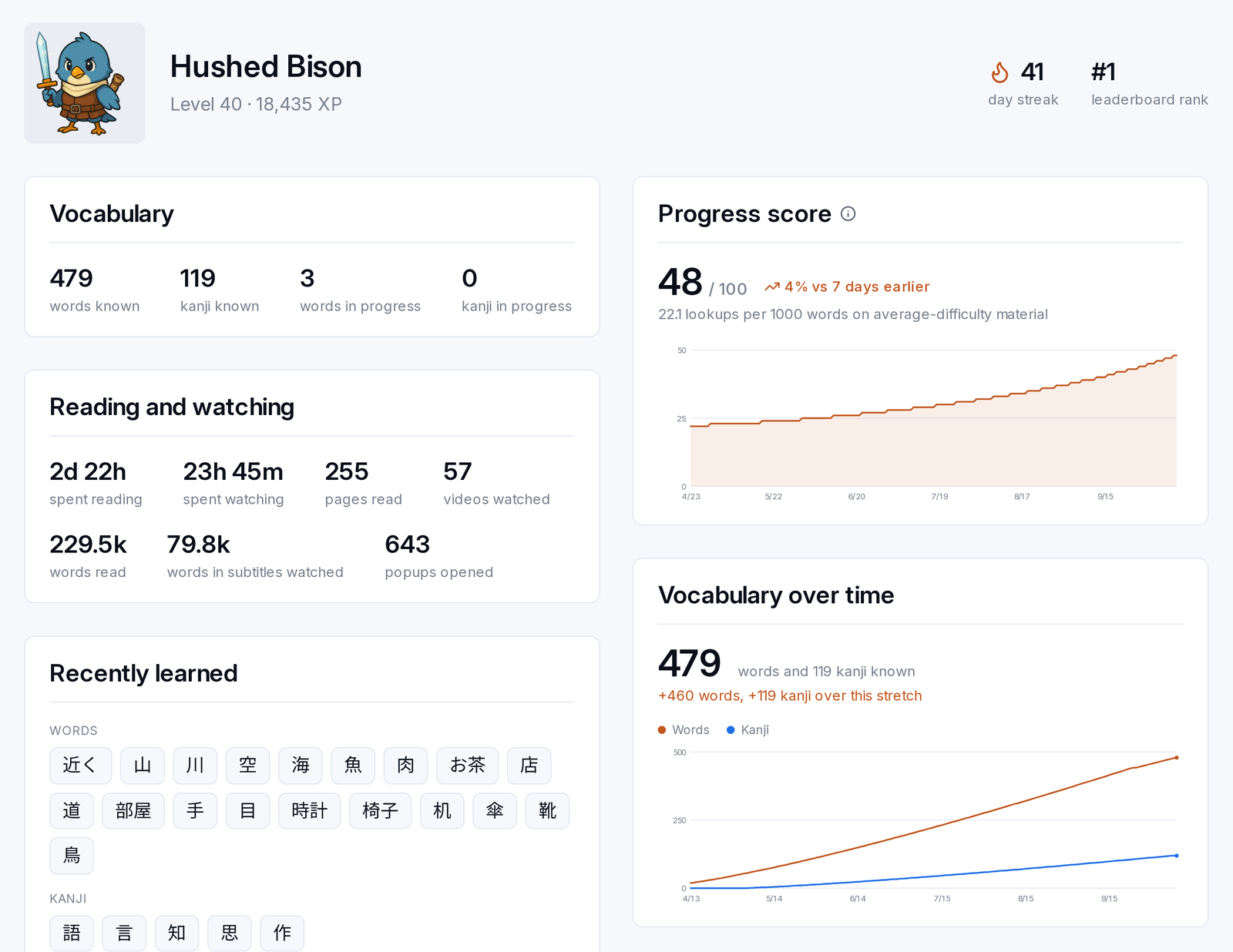
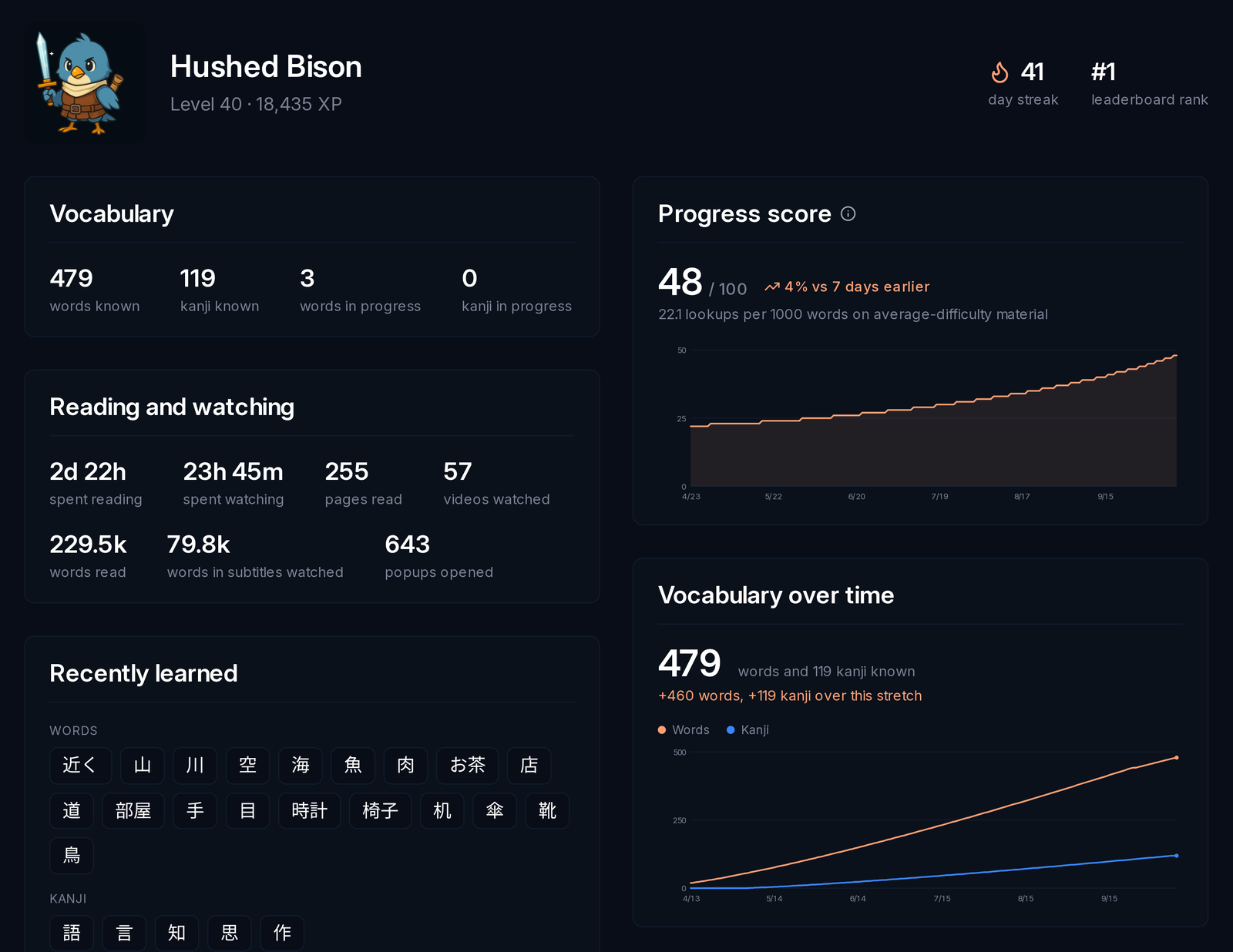
Your profile adds up the time you spent reading and watching, the pages, videos and words you read, and the words and kanji you know.
Reading teaches you, if the text fits
Three things, none of them complicated.
You can start from absolutely nothing
Never studied Japanese before? You don’t need to learn the basics somewhere else first.
- 156 lessons across 17 sections, starting with hiragana and katakana.
- Each lesson includes an explanation, a dialogue you can read with the popup dictionary, its own vocabulary deck, and the grammar it introduces.
- A kana quiz for hiragana and katakana, with the full tables there whenever you need them.
- Lessons unlock in order, but you can skip anything you already know.
Take the placement test to give Lingaku a starting point. It takes about five minutes and checks which words you already know, so your coverage percentages and review queues don’t have to start from zero. You can retake it later, merge the result with progress you’ve already made, or undo it entirely.
Already have a list of words you know? Import it from CSV instead and Lingaku can use that as your starting vocabulary.
30 Days of Japanese is a paid course with one lesson a day, about half an hour each. It goes from no Japanese at all to reading a short paragraph unaided.
What else is in there
The parts you’ll reach for once Lingaku becomes part of how you study.
Lingaku speaks Japanese and Chinese
Everything on this page works the same way in each one. Progress, decks and lookups are kept separately per language, so switching never mixes them up.
Who builds this
Just me.
Lingaku started at university as my bachelor’s thesis, then became my master’s thesis, and I’ve kept building it ever since. That’s about ten years now.
There’s no team, no investors, and no growth targets. I’m a long-term Japanese learner, and Lingaku is the tool I wanted for myself. Most of what’s on this page exists because at some point, I wanted it while learning Japanese.
What I’m working on
- A mobile app for flashcards, so reviewing works properly on a phone.
- Grammar review cards, from example sentence to explanation.
- A tool for practising conjugations.
- Full-screen search across lessons, decks, and grammar.
Planned, not shipped yet. The order may change.
Start reading Japanese
Everything above is free to use. Create an account and find something you want to read.
 Lingaku